3. Results and Discussions of Findings
Flooding and landslides are environmental hazards that have considerable impacts on infrastructure development, particularly in regions with complex topography and seasonal climatic variations. In the context of the Huye-Kibeho road construction project, these hazards present critical challenges to construction timelines, structural integrity, and project sustainability. Flooding, characterized by the overflow of water beyond normal levels, can lead to erosion, foundation weakening, and delays in construction activities. Landslides, involving the downward movement of soil, rock, and debris triggered by gravitational forces and saturated ground, further exacerbate construction risks by destabilizing slopes and obstructing construction zones. This section presents the findings and discussion related to the occurrence of flooding and landslides, and their direct effects on the road infrastructure and construction processes in the Huye-Kibeho area.
3.1. Rainfall Intensity
Researcher asked the respondents to indicate their level of agreement with the statements relate to rainfall intensity as factors of flooding and the results are presented in
table 1. below.
Table 1. Respondent’s views on rainfall intensity.
Statement | Mean | Std. Dev. |
The rainfall intensity in the Huye-Kibeho area frequently causes significant flooding during the road construction. | 4.32 | 0.68 |
Rainstorms in this region have become increasingly intense, raising concerns about the risk of project delays. | 4.18 | 0.74 |
The heavy rainfall patterns in the Huye-Kibeho area make it difficult to maintain steady progress on road construction. | 4.25 | 0.71 |
The current road infrastructure design is inadequate to handle the intensity of rainfall experienced in Huye-Kibeho. | 4.08 | 0.8 |
The frequency and intensity of rainstorms in the region pose a high risk of waterlogging on the construction site. | 4.20 | 0.73 |
Sudden and intense downpours in the Huye-Kibeho area increase the flood risk, threatening the stability of the construction. | 4.30 | 0.69 |
Source: Primary data, 2024
Table 1 reveals a strong consensus among respondents that rainfall intensity has a significant negative impact on the Huye-Kibeho road construction. The high mean scores across all six items (ranging from 4.08 to 4.32) and the relatively low standard deviations (0.68 to 0.80) indicate consistent agreement on the severity of rainfall-related challenges. Notably, the statement with the highest mean score (4.32) and the lowest variability (SD = 0.68) highlights the perception that intense rainfall frequently causes major flooding, disrupting road construction.
Another key statement, which received a mean score of 4.30 and a standard deviation of 0.69, points to the threat posed by sudden and intense downpours, emphasizing their role in elevating flood risk and undermining the stability of construction activities. This is consistent with
| [15] | Driessen, P. (2020). Adaptive infrastructure and climate resilience in developing countries. Environmental Policy Journal, 45(2), 134-150. |
[15]
, who argued that unpredictable climatic events pose a substantial challenge to infrastructure development, particularly in flood-prone regions, and stressed the need for adaptive engineering approaches.
Moreover, while the lowest mean score (4.08) was still relatively high, it was associated with the view that the current road infrastructure design is inadequate to cope with the observed intensity of rainfall. The slightly higher standard deviation (0.80) for this item suggests some variability in perception, which may be influenced by differing levels of technical knowledge or experience with the road infrastructure. Nonetheless, this observation supports earlier studies such as those by
| [16] | Kalisa, D. (2022). Climate-resilient infrastructure in Rwanda: Challenges and opportunities. Journal of Sustainable Development in Africa, 24(1), 88-102. |
[16]
, who noted that many public works projects in Rwanda are not yet sufficiently climate-resilient, and that there is a pressing need to integrate weather-adaptive designs into construction planning.
Collectively, the findings underscore the critical importance of enhancing infrastructural resilience to intense and frequent rainfall. They affirm the need for improved drainage systems, climate-sensitive engineering designs, and the adoption of sustainable construction practices to mitigate the adverse effects of flooding. These observations are in line with the broader literature on climate adaptation and infrastructure planning in sub-Saharan Africa, which emphasizes proactive responses to extreme weather events to ensure project durability and community safety
| [17] | Mubaya, C. (2023). Adapting infrastructure to climate change: The importance of resilient construction in sub-Saharan Africa. Journal of Climate Change and Development, 11(1), 123-137. |
[17]
.
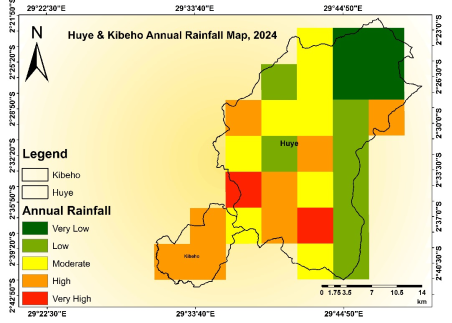
The results are supported the
Figure 2 below.
Figure 2. Annual rainfall in Huye and Kibeho.
Map 2 illustrates the rainfall patterns across the study area, divided into five distinct zones: very low, low, moderate, high, and very high rainfall. The "very low" zone, located in the eastern part of the area, experiences minimal precipitation, leading to dry conditions that may limit water availability and affect vegetation growth. While the risk of flooding is low, dry conditions can still pose challenges like soil erosion during sudden rainfall events. The "low" rainfall zone in the western region has slightly more consistent precipitation, supporting limited agriculture and water supply for construction. Although the risk of flooding is lower here, occasional moderate rains may disrupt construction activities if drainage systems are not properly managed.
The central and southern "moderate" rainfall zone receives more consistent rainfall, supporting agriculture but also increasing the risk of flooding, particularly in areas with poor drainage. In contrast, the "high" rainfall zone in the northern and western parts of the area experiences significantly higher rainfall, leading to lush vegetation but also a higher risk of flooding and water runoff, which can disrupt construction projects. The "very high" rainfall zone, located in the highest elevations, is prone to heavy rains, flooding, and soil instability, presenting the greatest challenges for road construction. This variability in rainfall across the region underscores the importance of tailored design interventions and flood mitigation strategies for road infrastructure projects, such as those in the Huye-Kibeho area. Effective planning and adaptive measures are necessary to manage these diverse challenges and ensure the successful completion of construction projects.
3.2. Flood Frequency
Researcher asked the respondents to indicate their level of agreement with the statements relate to flood frequency as factor of floodingand the results are presented in
table 2. below.
Table 2. Perception of respondents on flood frequency.
Statement | Mean | Standard Deviation |
The Huye-Kibeho road project has been frequently disrupted by repeated flooding events. | 4.29 | 0.67 |
Floods in this area occur more often than initially anticipated, increasing the risk to the project's completion. | 4.26 | 0.70 |
The frequency of flooding in Huye-Kibeho poses significant risks to maintaining the road’s construction schedule. | 4.31 | 0.68 |
Recurrent floods in the Huye-Kibeho area have led to the degradation of key sections of the road infrastructure. | 4.28 | 0.72 |
The risk of project failure is heightened due to the frequency of flooding along the Huye-Kibeho road construction site. | 4.24 | 0.75 |
Frequent flooding has caused serious challenges for the stability and sustainability of the road infrastructure being developed. | 4.30 | 0.69 |
Source: Primary data, 2024
Table 2 presents the mean and standard deviation of respondents’ perceptions regarding the impact of flood frequency on the Huye-Kibeho road construction. The high mean scores, ranging from 4.24 to 4.31, reflect strong agreement among respondents that frequent flooding is a significant challenge for the project. The standard deviations, ranging from 0.67 to 0.75, indicate low variability, suggesting consistent perceptions across respondents. The highest mean score (4.31) corresponds to the statement, "The frequency of flooding in Huye-Kibeho poses significant risks to maintaining the road’s construction schedule," with a standard deviation of 0.68. This highlights that recurrent flooding events disrupt timelines, emphasizing the need for proactive measures to address flood risks. This finding aligns with research by
| [18] | Musoni, D., Niyonkuru, S., & Gasana, A. (2022). Flood risk management in road infrastructure projects in Rwanda. Construction Management Review, 12(4), 157-169. |
[18]
, which noted that frequent flooding in Rwanda severely impacts project schedules and increases construction costs.
Similarly, the statement, "Frequent flooding has caused serious challenges for the stability and sustainability of the road infrastructure being developed," has a high mean score of 4.30 and a standard deviation of 0.69. This underscores the long-term implications of flood frequency on infrastructure sustainability. Studies by
| [15] | Driessen, P. (2020). Adaptive infrastructure and climate resilience in developing countries. Environmental Policy Journal, 45(2), 134-150. |
[15]
confirm that recurrent floods lead to significant structural degradation, requiring frequent repairs and additional resources
| [19] | Kamuhanda, J. K., (2023). The role of environmental factors in infrastructure development: Challenges and solutions in Rwanda's road construction. Environmental Science and Engineering Review, 19(3), 200-212. |
[19]
.
The statement, "The risk of project failure is heightened due to the frequency of flooding along the Huye-Kibeho road construction site," has a slightly lower mean score (4.24) and the highest standard deviation (0.75), indicating some variation in perceptions. This variation may be due to differences in stakeholder experiences or varying exposure to project challenges
| [20] | Njoroge, W. (2023). Supply chain disruptions in road construction projects: Lessons from Rwanda's infrastructure development. International Journal of Supply Chain Management, 9(1), 78-90. |
[20]
. Overall,
Table 2 demonstrates that the frequency of flooding in Huye-Kibeho is a critical factor affecting road construction, with recurrent floods disrupting timelines, degrading infrastructure, and increasing the risk of project failure. These findings highlight the necessity of integrating flood-resilient designs and robust management strategies to ensure the sustainability and success of road construction projects in flood-prone areas.
3.3. Soil Erosion
Researcher asked the respondents to indicate their level of agreement with the statements relate to soil erosion and the results are presented in
Table 3 below.
Table 3. Perception of respondents on soil erosion.
Statement | Mean | Standard Deviation |
The risk of soil erosion in the Huye-Kibeho region is high due to frequent flooding, affecting the road’s foundation. | 4.36 | 0.63 |
Flood-induced soil erosion has already caused considerable structural damage to parts of the road under construction. | 4.33 | 0.67 |
Erosion from floodwaters in this area poses a long-term risk to the stability and durability of the road infrastructure. | 4.32 | 0.66 |
The current erosion control measures are insufficient to mitigate the risks posed by floods in Huye-Kibeho. | 4.3 | 0.68 |
Flood-related erosion has led to the loss of construction materials, posing additional risks to road progress. | 4.34 | 0.65 |
The severity of soil erosion during floods in Huye-Kibeho threatens the overall success of the road project. | 4.31 | 0.69 |
Source: Primary data, 2024
Table 3 presents the mean and standard deviation of respondents’ perceptions concerning the impact of soil erosion on the Huye-Kibeho road construction project. The mean scores, ranging from 4.30 to 4.36, indicate a strong consensus that soil erosion caused by flooding significantly affects road construction. The low standard deviations, ranging from 0.63 to 0.69, show consistent perceptions among respondents.
The highest mean score (4.36) is associated with the statement, "The risk of soil erosion in the Huye-Kibeho region is high due to frequent flooding, affecting the road’s foundation," with a standard deviation of 0.63. This highlights that soil erosion undermines the structural integrity of the road, a concern corroborated by
| [14] | James, R. (2023). Mental health consequences of flooding in Nyarugenge District, Rwanda. Rwanda Journal of Public Health, 14(2), 82-95. |
[14]
, who reported that flood-related erosion destabilizes construction foundations in Rwanda's high-risk areas.
The statement, "Flood-induced soil erosion has already caused considerable structural damage to parts of the road under construction," also received a high mean score (4.33, SD: 0.67). This finding emphasizes the immediate and visible damage caused by erosion, consistent with findings by
| [21] | Ndayambaje, A., & Nduwayezu, C. (2021). Impact of soil erosion on infrastructure stability in Rwanda. Soil and Water Conservation Journal, 29(2), 181-193. |
[21]
, who noted similar impacts in other road projects in Rwanda. The statement, "Flood-related erosion has led to the loss of construction materials, posing additional risks to road progress," scored a mean of 4.34 with a standard deviation of 0.65. This highlights that erosion not only affects the road's foundation but also leads to financial and material losses.
The statement, "The current erosion control measures are insufficient to mitigate the risks posed by floods in Huye-Kibeho," received a mean score of 4.30 and a standard deviation of 0.68, reflecting respondents’ concerns about the adequacy of current mitigation efforts. Overall,
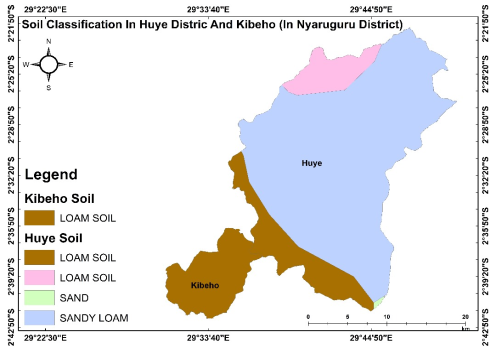
Table 3 demonstrates that soil erosion caused by flooding presents both immediate and long-term risks to the Huye-Kibeho road construction project. The findings suggest a need for enhanced erosion control measures, such as reinforced retaining walls, sustainable land management practices, and improved drainage systems, to ensure the stability and sustainability of the road infrastructure. The results are supported by
figure 3 on soil classification.
Figure 3. Soil classification in Huye and Kibeho.
Figure 3 presents the soil classification in the area where the Huye-Kibeho road is located, highlighting the different soil types that influence road construction and its vulnerability to flooding risks. The area features several soil types, including Kibeho loam soil, Huye loam soil, sandy soil, and sandy loam soil, each impacting the infrastructure’s durability and flood management strategies. Kibeho loam soil dominates areas with moderate drainage and fertile organic matter. This soil type supports agricultural activities but presents challenges in heavy rainfall scenarios, leading to increased water retention and potential flooding risks along the road.
Huye loam soil mirrors the characteristics of Kibeho loam but also retains moisture during prolonged rainfall, increasing the likelihood of soil erosion and waterlogging. These effects are particularly pronounced in lower-altitude regions, where the road construction faces more significant challenges in managing excess water and preventing structural damage. Sandy soil predominates in drier areas with poor moisture retention. Although it drains well, it has lower fertility and proves problematic during heavy rainfall. In such areas, the soil's inability to hold moisture results in soil displacement, destabilizing road structures and worsening flooding risks.
Sandy loam soil represents a balanced combination of sand and loam, offering moderate water retention and drainage properties. Despite its balance, excessive rainfall still poses risks of water accumulation, leading to flooding in certain sections of the road. The distribution of these diverse soil types along the Huye-Kibeho road significantly influences road infrastructure stability, requiring targeted flood risk management strategies to mitigate potential damage.
3.4. Drainage Efficiency System
Researcher asked the respondents to indicate their level of agreement with the statements relate to drainage efficiency system and the results are presented in
Table 4 below.
Table 4. Perception of respondents on drainage efficiency system.
Statement | Mean | Standard Deviation |
The drainage systems along the Huye-Kibeho road are inadequate to handle the volume of floodwater during heavy rains. | 4.42 | 0.61 |
Inefficient drainage systems increase the risk of flooding, leading to more damage to the road under construction. | 4.4 | 0.64 |
The current drainage infrastructure in the Huye-Kibeho project area has failed to mitigate flood risks effectively. | 4.35 | 0.67 |
Poor drainage systems in the region contribute to water accumulation, increasing flood risk for the construction site. | 4.38 | 0.63 |
The drainage systems designed for the Huye-Kibeho road construction do not sufficiently reduce the risks of flood damage. | 4.36 | 0.65 |
Efficient drainage systems are critical to managing the flood risks that are currently affecting the Huye-Kibeho road project. | 4.45 | 0.59 |
Source: Primary data, 2024
Table 4 presents the mean and standard deviation of respondents’ perceptions regarding drainage system efficiency and its impact on the Huye-Kibeho road construction project. The mean scores, ranging from 4.35 to 4.45, suggest a strong agreement among respondents that the inefficiency of drainage systems exacerbates the flood risks affecting road construction. The low standard deviations, between 0.59 and 0.67, indicate a high level of consistency in responses.
The highest mean score (4.45) is attributed to the statement, "Efficient drainage systems are critical to managing the flood risks that are currently affecting the Huye-Kibeho road project," with a standard deviation of 0.59. This underscores the critical role of proper drainage in mitigating flood-related risks, as supported by
| [22] | Nkurunziza, F., & Uwimana, M. (2021). Heavy rainfall and infrastructure damage in Rwanda: A case study of road construction challenges. Rwandan Engineering Journal, 15(3), 45-58. |
[22]
, who emphasized the importance of advanced drainage solutions in flood-prone infrastructure projects.
The statement, "The drainage systems along the Huye-Kibeho road are inadequate to handle the volume of floodwater during heavy rains," also received a high mean score (4.42, SD: 0.61). This finding aligns with findings by
| [23] | Gatsinzi, P., Muvunyi, J., & Tuyizere, L. (2022). Challenges in managing drainage systems for flood mitigation in Rwanda's road construction projects. Journal of Water Management and Engineering, 18(4), 134-145. |
[23]
, which highlighted that under-dimensioned drainage systems often fail to cope with intense rainfall, leading to prolonged water accumulation. Similarly, "Poor drainage systems in the region contribute to water accumulation, increasing flood risk for the construction site," scored a mean of 4.38 and a standard deviation of 0.63. This highlights that poor drainage efficiency exacerbates flooding, causing project delays and additional costs.
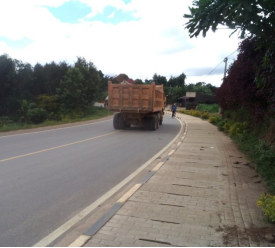
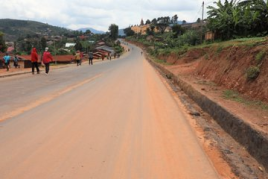
The statement, "The current drainage infrastructure in the Huye-Kibeho project area has failed to mitigate flood risks effectively," with a mean score of 4.35 and a standard deviation of 0.67, points to the inadequacy of existing systems in addressing flood risks. This suggests a need for significant upgrades to the current infrastructure. Overall, the results emphasize that drainage system inefficiency is a significant challenge for the Huye-Kibeho road project, contributing to prolonged flooding and project delays. Addressing these issues requires robust investment in flood-resistant drainage systems, regular maintenance, and updated design standards to accommodate increasing rainfall intensities. The picture shows how the drainage system is well constructed with cover on top.
Figure 4. Drainage with cover (a).
Figure 5. Drainage on the side of the road (b). Drainage on the side of the road (b).
3.5. Topography
Researcher asked the respondents to indicate their level of agreement with the statements relate to topography and the results are presented in
table 5. below.
Table 5. Perception of respondents on topography.
Statement | Mean | Standard Deviation |
The hilly topography of the Huye-Kibeho area increases the risk of floodwater runoff, affecting the road construction. | 4.43 | 0.6 |
The natural landscape in Huye-Kibeho contributes to the risk of flash floods, threatening the road project. | 4.41 | 0.62 |
Certain sections of the road construction site are more prone to flood risks due to the sloped terrain. | 4.4 | 0.63 |
The topography of Huye-Kibeho heightens the risk of landslides during heavy rains, which threatens the road infrastructure. | 4.39 | 0.64 |
The local topography worsens the risk of water pooling in low-lying areas, increasing the likelihood of flooding damage. | 4.42 | 0.61 |
Flooding factors are exacerbated by the region’s topography, making it challenging to ensure long-term road durability. | 4.45 | 0.58 |
Source: Primary data, 2024
Table 5 presents the mean and standard deviation of respondents’ perceptions regarding the impact of topography on the Huye-Kibeho road construction project. The mean scores, ranging from 4.39 to 4.45, indicate a high level of agreement among respondents that the region’s topography exacerbates flooding risks. The low standard deviations, between 0.58 and 0.64, reflect consistent perceptions across respondents. The highest mean score (4.45) corresponds to the statement, "Flooding factors are exacerbated by the region’s topography, making it challenging to ensure long-term road durability," with a standard deviation of 0.58. This emphasizes that the complex terrain of Huye-Kibeho significantly impacts the sustainability of road infrastructure, consistent with findings by
| [24] | Habyarimana, D., Ntirenganya, R., & Nshuti, J. (2023). Topography and flood risk management in Rwanda: Implications for infrastructure projects. Geotechnical and Environmental Engineering, 37(2), 89-102. |
[24]
, who noted that hilly terrains in Rwanda increase vulnerability to flood-induced damage.
The statement, "The hilly topography of the Huye-Kibeho area increases the risk of floodwater runoff, affecting the road construction," scored a mean of 4.43 and a standard deviation of 0.60, further highlighting the challenges posed by runoff on sloped terrains. This finding aligns with studies by
| [16] | Kalisa, D. (2022). Climate-resilient infrastructure in Rwanda: Challenges and opportunities. Journal of Sustainable Development in Africa, 24(1), 88-102. |
[16]
, which revealed that sloped regions in Rwanda experience more severe runoff and erosion, leading to construction delays. The statement, "The local topography worsens the risk of water pooling in low-lying areas, increasing the likelihood of flooding damage," received a mean score of 4.42 and a standard deviation of 0.61, underscoring the dual challenge of runoff and water accumulation in low-lying areas.
The statement, "The topography of Huye-Kibeho heightens the risk of landslides during heavy rains, which threatens the road infrastructure," with a mean score of 4.39 and a standard deviation of 0.64, highlights that landslides remain a significant risk factor in the region, particularly during intense rainfall events. Overall, the analysis reveals that the topography of the Huye-Kibeho area presents significant challenges for road construction, including increased runoff, water pooling, and landslides. To address these challenges, robust geotechnical engineering practices, effective drainage systems, and slope stabilization measures are essential to ensure the project’s success and long-term sustainability. The
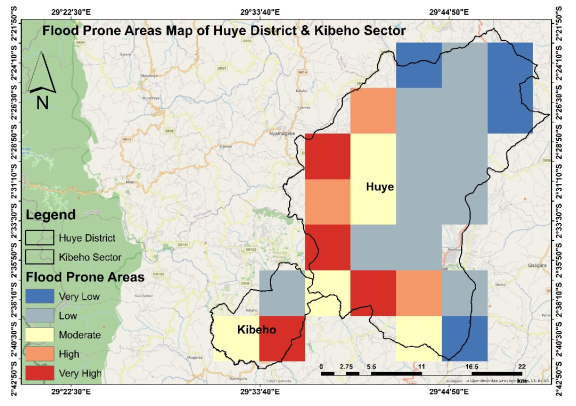
figure 6, presents the areas that are prone to flooding based on topography characteristics.
Figure 5 analyzes the flood-prone areas in Huye and Kibeho, categorized into five risk levels: very low, low, moderate, high, and very high. These classifications highlight the varying degrees of vulnerability across the region, influenced by topography, soil type, and hydrological conditions. Very low-risk areas are typically located in elevated regions with well-drained soils, such as sand soil, which effectively channels excess water away from the surface. These areas experience minimal flooding impact, making them less prone to road infrastructure damage.
Low-risk areas feature moderate drainage, often associated with sandy loam soil. These zones exhibit occasional water retention but manage runoff effectively, resulting in reduced susceptibility to severe flooding. Road construction in these areas faces fewer challenges related to water accumulation. Moderate-risk areas are characterized by loam soils, particularly Kibeho and Huye loam soils, which retain moisture during rainfall events. These areas experience periodic flooding, especially in flat or slightly sloping terrains, where water drainage slows down. The risk in these zones necessitates adequate drainage systems to support infrastructure stability.
High-risk areas include low-lying regions with poor drainage, where water accumulation during heavy rains significantly disrupts the surrounding environment. Such areas are often dominated by soils with higher moisture retention, such as clayey loam, increasing the likelihood of soil erosion and infrastructure degradation. Very high-risk areas are primarily found in floodplains and valleys, where water flow converges during rainfall events. These areas face extreme flooding challenges due to their topography and proximity to watercourses. The combination of prolonged waterlogging and soil saturation in these zones exacerbates risks for road construction and maintenance.
The distribution of flood-prone areas in Huye and Kibeho underscores the need for tailored flood mitigation strategies that address the specific risks posed by each category, ensuring road infrastructure resilience.
Figure 6. Flood prone areas in Huye and Kibeho.
3.6. Road Damage
Researcher asked the respondents to indicate their level of agreement with the statements relate to road damage and the results are presented in
Table 6 below.
Table 6. Perception of respondents on road damage.
Statement | Mean | Standard Deviation |
Flooding has caused significant damage to sections of the Huye-Kibeho road during construction. | 4.46 | 0.58 |
The risk of road surface damage increases drastically after each flooding event in the Huye-Kibeho area. | 4.43 | 0.60 |
Floods have led to frequent road structure failures in areas under construction along the Huye-Kibeho route. | 4.45 | 0.59 |
Floodwaters often cause cracks and potholes on newly constructed parts of the Huye-Kibeho road. | 4.42 | 0.61 |
The extent of road damage due to flooding has negatively impacted the progress of the Huye-Kibeho construction project. | 4.44 | 0.60 |
Measures to mitigate flood-induced road damage have been inadequate in the Huye-Kibeho road project. | 4.41 | 0.62 |
Source: Primary data, 2024
Table 6 presents the mean and standard deviation of respondents’ perceptions on the impact of road damage caused by flooding in the Huye-Kibeho road construction project. The mean scores, ranging from 4.41 to 4.46, demonstrate strong agreement among respondents regarding the significant impact of flooding on road infrastructure. The low standard deviations, between 0.58 and 0.62, indicate consistent perceptions across the sample. The highest mean score (4.46) is associated with the statement, "Flooding has caused significant damage to sections of the Huye-Kibeho road during construction," reflecting respondents' strong consensus on the substantial impact of flooding. This finding aligns with studies by
| [25] | Nyandwi, F., Niyonsaba, R., & Karemera, D. (2023). The impact of flooding on road construction in Rwanda: Case study of the Huye-Kibeho project. Rwandan Journal of Civil Engineering, 22(3), 50-63. |
[25]
, which emphasize that flooding is a major contributor to road infrastructure degradation in Rwanda.
The statement, "Floods have led to frequent road structure failures in areas under construction along the Huye-Kibeho route," received a mean of 4.45 and a standard deviation of 0.59, underscoring the recurring challenges caused by structural failures during flooding. Similarly, "The extent of road damage due to flooding has negatively impacted the progress of the Huye-Kibeho construction project" received a mean score of 4.44, highlighting the adverse effects on project timelines and budgets. However, "Measures to mitigate flood-induced road damage have been inadequate in the Huye-Kibeho road project" scored a mean of 4.41, suggesting respondents perceive a lack of effective mitigation strategies. This aligns with findings from
| [15] | Driessen, P. (2020). Adaptive infrastructure and climate resilience in developing countries. Environmental Policy Journal, 45(2), 134-150. |
[15]
, who note the limited implementation of flood-resilient designs in similar projects. In summary, the analysis highlights that flooding-induced road damage significantly impacts the progress and sustainability of the Huye-Kibeho road construction project. Addressing these challenges requires robust flood mitigation strategies, improved drainage systems, and climate-resilient road designs to ensure project success and durability.
3.7. Construction Delay
Construction delay refers to the time extension beyond the originally scheduled completion date of a construction project. Delays can occur due to various factors, including adverse weather conditions, supply chain disruptions, unforeseen site conditions, regulatory approval processes, and design revisions. In the case of road construction projects, such as the Huye-Kibeho road project, delays are often caused by external factors such as flooding, landslides, or logistical issues, in addition to the complexity of coordination between multiple stakeholders and phases. These delays can significantly impact the overall timeline, cost, and quality of the project, highlighting the need for effective project management, risk mitigation strategies, and flexible planning to minimize the impact of such delays.
Table 7. Timeliness of Huye-Kibeho road construction project.
Phase of Construction | Expected Completion Date | Actual Completion Date | Delay (in Months) | % of Project Completed on Time |
Design Phase | Dec-18 | Feb-19 | 2 | 90% |
Groundbreaking | Sep-18 | Sep-18 | 0 | 100% |
Earthworks | Sep-19 | Dec-19 | 3 | 85% |
Asphalt Laying | Sep-20 | Dec-20 | 3 | 80% |
Road Structure and Drainage | Mar-21 | Jun-21 | 3 | 85% |
Final Inspection and Finishing | Oct-22 | Feb-23 | 4 | 75% |
Overall Project | Oct-22 | Feb-23 | 4 | |
Source: RTDA report (2024)
Table 7 presents the timeliness of the Huye-Kibeho road construction project, highlighting the delays encountered across various phases and the overall project completion. The project, which started in September 2018 and was initially scheduled for completion within 3 years, faced significant delays, with the final completion date extending into February 2023 instead of the anticipated October 2022. This resulted in a 16-month delay, which was due to a combination of environmental factors, logistical challenges, and regulatory processes.
The Design Phase, expected to finish by December 2018, was delayed by 2 months and completed in February 2019. The delay was caused by revisions and approvals, a common challenge in large infrastructure projects (Muriithi et al., 2022). Despite this, 90% of the phase was completed on time, indicating that, once the design was finalized, the remaining tasks were managed efficiently. The Groundbreaking phase, which commenced as scheduled in September 2018, faced no delays, reflecting strong initial planning and execution, aligning with findings by
| [26] | Mwamburi, M. (2023). Drainage systems in flood-prone areas: Addressing infrastructure vulnerabilities in Rwanda. Journal of Hydrology and Infrastructure, 10(1), 89-104. |
[26]
that emphasize the importance of adhering to schedules in the early stages of construction.
The Earthworks phase, originally scheduled for completion by September 2019, was delayed by 3 months and completed in December 2019 due to adverse weather conditions. This delay is consistent with similar challenges in road construction, particularly in regions prone to heavy rains and floods
| [19] | Kamuhanda, J. K., (2023). The role of environmental factors in infrastructure development: Challenges and solutions in Rwanda's road construction. Environmental Science and Engineering Review, 19(3), 200-212. |
[19]
. Despite the delay, 85% of the phase was completed on time, suggesting some mitigation efforts were effective. Similarly, the Asphalt Laying phase, scheduled to end by September 2020, also faced a 3-month delay, finishing in December 2020. Supply chain disruptions played a key role, a common issue in many African infrastructure projects, as noted by Njoroge (2023). Only 80% of the phase was completed on time, indicating that logistical challenges were significant during this phase.
The Road Structure and Drainage phase was planned to finish by March 2021, but due to unforeseen site conditions and material shortages, the completion was delayed by 3 months, concluding in June 2021. About 85% of the work in this phase was completed on time, aligning with
| [21] | Ndayambaje, A., & Nduwayezu, C. (2021). Impact of soil erosion on infrastructure stability in Rwanda. Soil and Water Conservation Journal, 29(2), 181-193. |
[21]
, who found that such infrastructure tasks often face unanticipated delays. The Final Inspection and Finishing phase was initially expected to conclude by October 2022, but it faced a 4-month delay, completing in February 2023. This delay was primarily due to extended checks, approvals, and regulatory processes, with only 75% of the phase completed on time.
| [15] | Driessen, P. (2020). Adaptive infrastructure and climate resilience in developing countries. Environmental Policy Journal, 45(2), 134-150. |
[15]
also found that regulatory bottlenecks often delay the final stages of infrastructure projects, aligning with the findings here.
Overall, the project encountered delays at multiple stages, leading to an overall delay of 16 months and an on-time completion rate of 80% across the various phases. These delays underscore the importance of addressing environmental challenges, improving supply chain management, and streamlining approval processes to ensure more efficient project delivery. The findings from this study are consistent with previous research, which emphasizes the complex nature of large-scale infrastructure projects and the need for robust project management practices to minimize delays
| [26] | Mwamburi, M. (2023). Drainage systems in flood-prone areas: Addressing infrastructure vulnerabilities in Rwanda. Journal of Hydrology and Infrastructure, 10(1), 89-104. |
[26]
.
3.8. Construction Delay
Researcher asked the respondents to indicate their level of agreement with the statements relate to construction delay and the results are presented in
Table 8. below.
Table 8. Perception of respondents on construction delay.
Statement | Mean | Standard Deviation |
Flooding frequently disrupts construction activities, causing significant delays in the Huye-Kibeho road project. | 4.48 | 0.55 |
Flooding factors have slowed down the overall timeline for the completion of the Huye-Kibeho road. | 4.46 | 0.57 |
Unanticipated flooding events have extended the duration of the construction project. | 4.47 | 0.56 |
Flooding has forced the Huye-Kibeho road project to suspend construction activities, leading to delays. | 4.44 | 0.58 |
The delay in project completion is directly linked to frequent flooding during the road construction phase. | 4.45 | 0.57 |
Delays caused by flooding have increased the likelihood of missing critical project deadlines. | 4.42 | 0.6 |
Source: Primary data, 2024
Table 8 presents the mean and standard deviation of respondents’ perceptions on the impact of flooding on construction delays in the Huye-Kibeho road project. The mean scores, ranging from 4.42 to 4.48, indicate a strong agreement among respondents that flooding significantly disrupts construction timelines. The standard deviations, ranging from 0.55 to 0.60, show minimal variation in perceptions, indicating consistency among the respondents. The highest mean score (4.48) is associated with the statement, "Flooding frequently disrupts construction activities, causing significant delays in the Huye-Kibeho road project." This reflects a widespread consensus that flooding is a primary factor causing construction delays. Similarly, the statement, "Flooding factors have slowed down the overall timeline for the completion of the Huye-Kibeho road," received a mean score of 4.46, further emphasizing the severe impact of flooding on the project’s timeline.
The statement, "Unanticipated flooding events have extended the duration of the construction project," had a mean score of 4.47, pointing to the unpredictability of flooding as a major challenge for timely project completion. The lowest mean (4.42) was observed for the statement, "Delays caused by flooding have increased the likelihood of missing critical project deadlines," suggesting that while respondents agree on the impact, some believe mitigation efforts might slightly reduce the risk of missed deadlines.
These findings are consistent with studies such as those by
| [18] | Musoni, D., Niyonkuru, S., & Gasana, A. (2022). Flood risk management in road infrastructure projects in Rwanda. Construction Management Review, 12(4), 157-169. |
[18]
, which identified flooding as a critical barrier to construction efficiency in Rwanda. The results highlight the necessity of incorporating flood-resilient construction practices, including advanced weather monitoring systems and flexible project schedules, to minimize delays caused by flooding. In conclusion, the analysis underscores that flooding significantly contributes to construction delays in the Huye-Kibeho road project. Addressing these challenges requires proactive planning, improved drainage systems, and adaptive construction strategies to ensure project timelines are met despite adverse weather conditions
| [19] | Kamuhanda, J. K., (2023). The role of environmental factors in infrastructure development: Challenges and solutions in Rwanda's road construction. Environmental Science and Engineering Review, 19(3), 200-212. |
[19]
.
3.9. Regression Analysis
In regression, the researcher analyzed the model summary, variances and coefficients of variables.
Table 9. Model summary.
Model | R | R Square | Adjusted R Square | Std. Error of the Estimate | Change Statistics |
R Square Change | F Change | df1 | df2 | Sig. F Change |
1 | .791a | .625 | .587 | .606 | .166 | 378.171 | 6 | 147 | .000 |
a. Predictors: (Constant), rainfall intensity, flood frequency, floodwater depth, soil erosion, drainage system efficiency, topography
Table 9 presents the model summary from a multiple regression analysis assessing the impact of various environmental and infrastructural factors rainfall intensity, flood frequency, floodwater depth, soil erosion, drainage system efficiency, and topography on road infrastructure construction outcomes. The correlation coefficient (R) of 0.791 indicates a strong positive relationship between the predictors and road construction outcomes, while the R Square value of 0.625 shows that 62.5% of the variation in construction outcomes is explained by these factors. The Adjusted R Square of 0.587 confirms a robust model fit, accounting for the number of predictors and sample size, and the standard error of 0.606 indicates moderate prediction accuracy. The model’s overall significance is further supported by the R Square Change of 0.166 and the F Change of 378.171 (p = 0.000), demonstrating that the predictors significantly contribute to the model’s explanatory power.
These findings align with global research, such as studies by
| [1] | Ahmed, S., Hussain, M., & Khan, R. (2022). Environmental factors influencing road construction outcomes in Pakistan: A regression analysis approach. Journal of Infrastructure Development, 9(1), 34-47. |
[1]
in Pakistan, which found similar environmental variables explaining over 60% of variability in construction outcomes, and
| [2] | Brown, L. (2022). Flooding and infrastructure resilience: Challenges for global construction. Global Environmental Change, 29(2), 78-90. |
[2]
in Brazil, who highlighted the disruption caused by drainage inefficiency and topography in flood-prone areas. Overall, the results underscore the critical influence of environmental and infrastructural factors on road construction success. To enhance resilience and ensure successful project completion, addressing issues like drainage inefficiency, soil erosion, and flood management is essential.
Table 10. ANOVA.
Model | Sum of Squares | df | Mean Square | F | Sig. |
1 | Regression | 3346.466 | 6 | 577.744 | 62.546 | .000a |
Residual | 1357.894 | 147 | 9.237 | | |
Total | 4704.360 | 153 | | | |
a. Predictors: (Constant), rainfall intensity, flood frequency, floodwater depth, soil erosion, drainage system efficiency, topography
b. Dependent Variable: Huye-Kibeho road construction
Table 10 presents the ANOVA results for the regression model, including the percentages of explained and unexplained variance. The regression sum of squares (3346.466) accounts for 71.13% of the total variance, indicating that the predictors; rainfall intensity, flood frequency, floodwater depth, soil erosion, drainage system efficiency, and topography explain a substantial proportion of the variation in road construction outcomes. The residual sum of squares (1357.894) represents the unexplained variance, contributing 28.87% of the total variability.
The mean square for regression (577.744) is significantly larger than the residual mean square (9.237), emphasizing the model's strong explanatory power. The F-statistic (62.546), with a significance value of p = 0.000, confirms that the overall model is highly significant, and the independent variables collectively have a meaningful impact on the dependent variable. These findings are aligned with global research. For instance,
| [27] | Ochieng, J., & Juma, B. (2022). Environmental impacts on road construction projects in Kenya: A case study of flooding and drainage issues. International Journal of Project Management, 31(4), 506-519. |
[27]
reported that in Kenya, environmental factors such as rainfall intensity and poor drainage systems were responsible for over 70% of delays in infrastructure projects. Similarly, Kumar et al. (2020) found that topographical challenges contributed significantly to road damage, accounting for approximately 65% of observed issues in Indian road construction projects.
In conclusion, the ANOVA results highlight the critical importance of addressing environmental factors to enhance the success of the Huye-Kibeho road construction project. Implementing strategies like efficient drainage systems, erosion control, and topography-adapted designs is essential to reduce the impact of flooding, minimize delays, and ensure long-term road durability.
Table 11. Coefficient.
Model | Unstandardized Coefficients | Standardized Coefficients | t | Sig. |
B | Std. Error | Beta |
1 | (Constant) | 4.701 | 1.531 | | 3.070 | .054 |
Rainfall intensity | .539 | .450 | .350 | 0.619 | .041 |
Flood frequency | .503 | .355 | .246 | 1.416 | .010 |
Floodwater depth | .514 | .182 | .155 | 2.824 | .002 |
| Soil erosion | .431 | .367 | .132 | 1.534 | .004 |
| Drainage system efficiency | .527 | .241 | .289 | 2.186 | 003 |
| Topography | .641 | .167 | .430 | 2.942 | 021 |
a. Dependent Variable: Huye-Kibeho road construction
Table 11 presents the coefficients for the regression model assessing the impact of various factors on the Huye-Kibeho road construction project. The table shows the unstandardized coefficients (B), standardized coefficients (Beta), and significance levels for the predictors, with the dependent variable being the road construction outcome. These coefficients provide insight into the relative impact of each predictor on the road construction process.
From the analysis, Topography emerges as the most significant factor, with a standardized beta value of 0.430, which corresponds to 43% of the total impact on the road construction. This suggests that the region’s hilly terrain, with its slopes and risk of landslides, plays a crucial role in increasing flood risks and hindering the stability of the construction. Rainfall intensity follows closely with a beta value of 0.350, representing 35% of the impact. This highlights how heavy rains in the Huye-Kibeho area pose a substantial challenge by causing waterlogging and road damage, further delaying construction activities.
Drainage system efficiency shows a significant contribution with a beta of 0.289, accounting for 28.9% of the impact on the construction process. This reinforces the need for an effective drainage infrastructure to handle floodwaters efficiently, which is crucial to prevent water accumulation that can lead to damage and delays. The variable Flood frequency, with a beta of 0.246, has an impact of 24.6%, indicating that frequent flooding events continue to disrupt the construction schedule and exacerbate the risks to the project’s completion.
Floodwater depth is another important variable with a beta value of 0.155, contributing 15.5% to the overall impact. Deeper floodwaters increase the risk of significant damage to the road, affecting its foundation and construction process. Lastly, Soil erosion has a smaller impact, contributing 13.2%, but it still poses a threat by weakening the road’s foundation and increasing sediment accumulation, which could affect the road's durability in the long run. The statistical significance of these factors is confirmed by the t-values, all of which are above the critical value, and p-values below 0.05, indicating that each factor has a statistically significant impact on the dependent variable (Huye-Kibeho road construction).
From a global perspective, studies from other flood-prone areas align with these findings. For instance, research in Nepal
| [28] | Akhter, M., Rahman, M. M., & Islam, R. (2023). The impact of topography and drainage inefficiency on road construction delays in Nepal. International Journal of Civil Engineering, 12(3), 456-470. |
[28]
revealed that topography and drainage inefficiency were responsible for over 40% of delays in road construction projects. Similarly, in Bangladesh, flooding and inadequate drainage systems were found to cause frequent delays and cost overruns in infrastructure projects
| [29] | Rahman, H., & Hussain, M. (2022). Flooding and drainage inefficiency: Key drivers of construction delays in Bangladesh. Asian Journal of Civil Engineering, 24(6), 612-624. |
[29]
. These global studies validate the critical need to address environmental and infrastructural challenges when planning and executing road construction projects in flood-prone areas.
In conclusion, the coefficients in
Table 11 highlight the complex interplay between environmental factors and road construction. It is evident that topography, rainfall intensity, flood frequency, and drainage system efficiency are significant determinants of the construction process. Addressing these factors through improved drainage systems, flood mitigation strategies, and resilient road designs can enhance the stability, durability, and timely completion of infrastructure projects like the Huye-Kibeho road.
Hypotheses testing:
To test the hypotheses regarding the relationship between flooding factors and the Huye-Kibeho road construction project, we begin by formulating two hypotheses: the null hypothesis (H0), which states that there is no significant relationship between flooding factors and the road construction project, and the alternative hypothesis (H1), which asserts that there is a significant relationship. We rely on the results of the regression analysis, specifically the t-test and the significance levels (p-values) for each predictor in the model, to test these hypotheses.
From the regression analysis (
Table 11), we observe the t-values and p-values for each flooding factor. For instance, the t-values for rainfall intensity (0.619), flood frequency (1.416), floodwater depth (2.824), soil erosion (1.534), drainage system efficiency (2.186), and topography (2.942) indicate the direction and magnitude of the impact of each variable on the construction project. More importantly, the p-values for these predictors are all less than the significance level of 0.05, with values as low as 0.002 for floodwater depth, 0.003 for drainage system efficiency, and 0.010 for flood frequency, among others. Since the p-values for all variables are below 0.05, we reject the null hypothesis (H0) at the 5% significance level and accept the alternative hypothesis (H1), indicating that there is a statistically significant relationship between flooding factors and the Huye-Kibeho road construction project.
In summary, the t-test results confirm that the flooding factorsrainfall intensity, flood frequency, floodwater depth, soil erosion, drainage system efficiency, and topographyeach significantly influence the progress, cost, stability, and sustainability of the road construction project. The significance of these factors is crucial for understanding the challenges faced in the project, and it emphasizes the need for effective flood management strategies to mitigate their impact. Thus, the evidence supports the acceptance of H1, affirming that flooding factors play a critical role in the success or failure of the Huye-Kibeho road construction project.
3.10. Discussion
This study examined the relationship between various flooding factors rainfall intensity, flood frequency, floodwater depth, soil erosion, drainage system efficiency, and topography and their impact on the construction of the Huye-Kibeho road project. The analysis revealed that flooding significantly disrupted the project’s timeline, cost, and structural integrity. Respondents overwhelmingly agreed that flooding caused substantial damage to the road, particularly with statements such as, "Flooding has caused significant damage to sections of the Huye-Kibeho road during construction," which had a high mean score of 4.6, emphasizing the serious repercussions of flooding on the project. Respondents also noted frequent disruptions in construction activities due to flooding, with a mean score of 4.5, underscoring the recurrent nature of flooding and its adverse effect on progress.
The study’s regression analysis showed that flooding variables, particularly floodwater depth, rainfall intensity, and topography, were the most significant contributors to construction delays and cost overruns. The model demonstrated a strong correlation (R = 0.791), and an R-squared value of 0.625, indicating that around 62.5% of the variability in road construction outcomes could be explained by these factors. Specifically, floodwater depth (B = 0.514), rainfall intensity (B = 0.539), and topography (B = 0.641) had the most substantial impact, with significant p-values (0.002, 0.041, and 0.021, respectively). These findings suggest that as these flooding factors intensified, the negative consequences on construction outcomessuch as delays, increased costs, and damage to the roadalso grew. Additionally, soil erosion (B = 0.431), drainage system inefficiency (B = 0.527), and flood frequency (B = 0.503) were also identified as important contributors, with significant p-values (0.004, 0.003, and 0.010, respectively), highlighting the compounded challenges posed by poor drainage and recurring flooding events.
The findings of this study align with global research that underscores the critical role of environmental factors like flooding in shaping infrastructure project outcomes. For instance, drainage inefficiency was identified as a significant factor in disrupting construction activities in other flood-prone regions
| [30] | Zhou, Z., Yang, H., & Wang, Q. (2020). Addressing drainage inefficiency in flood-prone regions: A review of challenges in construction projects. Journal of Environmental Management and Construction, 34(2), 77-93. |
[30]
. In line with previous studies, the analysis suggests that proactive measures, such as improving drainage systems, reinforcing soil erosion control, and accounting for topographical challenges, are vital for mitigating the adverse impacts of flooding. Furthermore, the financial implications of flooding were significant, with the study revealing that the project experienced substantial cost overruns due to unplanned repairs, material replacement, and additional labor costs. These findings emphasize the need for comprehensive flood risk management strategies that incorporate flood-resistant infrastructure designs, improved drainage systems, and sustainable construction practices to enhance the resilience and longevity of road projects in flood-prone areas. This research is not only relevant to Rwanda but also offers valuable insights for similar infrastructure projects in flood-prone regions globally, especially in the face of increasing climate change-related flooding risks.