Review Article | | Peer-Reviewed

Biochar's Role in Enhancing Soil Fertility and Current Trends of Utilization for Sustainable Coffee (Coffea arabica L.) Production: A Review

Received: 18 November 2024     Accepted: 3 December 2024     Published: 25 December 2024
Views:       Downloads:
Abstract

Biochar, a carbonaceous material prepared from diverse organic waste, has gained substantial attention due to its excellent attributes, like carbon content, CEC, abundant specific surface area, structural characteristics, plant nutrient contribution, water and plant nutrient retention etc. Incorporating biochar to the soil system introduces supplementary organic matter, thereby augmenting the comprehensive nutrient composition and microbial dynamics within the soil ecosystem for a long time that completely fit for perennial crops cultivated in acid prone areas like coffee production. Biochar producing organic materials are easily accessible in coffee production areas from coffee husks that pollute the river streams and generally create environmental pollution. However, as biochar advantages are too aged technology to solve general soil fertility problems, there is no comprehensive research recommendation generated for biochar application in coffee producing area specially in organic coffee producing countries like Ethiopia. Therefore, this systematic review attempts to gather more available empirical research on google scholars by using clearly defined, systematic terms to obtain answers for a specific question like ‘how to use biochar for coffee production and coffee nursery media preparations. More than 70 papers written by different authors and project papers were searched from google scholars and research gets. Through this investigation, we obtained critical information that may suggest the sustainable effects of biochar on enhancing soil fertility and improving both the production and productivity of coffee, while simultaneously preserving the ecological integrity of the soil system. Applying biochar for soil fertility enhancement is a critical technic that boosts the soil physical, chemical, and biological contents while mitigating the greenhouse gas like methane emission and sequestering the carbon stalk within the soil systems.

Published in Journal of Energy, Environmental & Chemical Engineering (Volume 9, Issue 4)

This article belongs to the Special Issue Emerging Trends in Agricultural Science for Sustainable Development

DOI 10.11648/j.jeece.20240904.12
Page(s) 100-108
Creative Commons

This is an Open Access article, distributed under the terms of the Creative Commons Attribution 4.0 International License (http://creativecommons.org/licenses/by/4.0/), which permits unrestricted use, distribution and reproduction in any medium or format, provided the original work is properly cited.

Copyright

Copyright © The Author(s), 2024. Published by Science Publishing Group

Keywords

Biochar, Coffee, Soil Fertility, Sustainability

1. Introduction
Biochar, a carbonaceous material prepared from diverse organic waste has gained substantial attention due to its excellent attributes, like carbon content, CEC, abundant specific surface area, and structural characteristics . Biochar (BC) is produced through the thermochemical decomposition of biomass in environments with restricted oxygen availability, a process commonly referred to as pyrolysis, and its application serves as a viable alternative to enhance the physical and chemical properties of soil . Different studies have demonstrated the potential uses of coffee waste as a valuable resource to produce biochar, and the optimization of the conversion process, that has shown great promise in improving the yield and quality of the final product, providing a valuable contribution to sustainable resource management . Incorporating biochar to the soil system introduces supplementary organic matter, thereby augmenting the comprehensive nutrient composition and microbial dynamics within the soil ecosystem . This synergistic consolidation facilitates enhancements in soil fertility, structural integrity, and moisture conservation, thereby fostering an optimal milieu for agricultural productivity . The utilization of biochar has been recorded as a viable method to enhance the physical, chemical, and biological characteristics of the soil . Coffee processing generates large quantities of residues, approximately 1.1 t∙ton–1 of coffee beans . Consequently, coffee producing country like Brazil and Ethiopia has an abundance of coffee-processing-derived biomass residues, which could serve as feedstock for biochar production.
Applying coffee pulp biochar (BC) can be a complementary practice to the application of chemical fertilizers (CF) of crops; however, little evidence of its combined effects on coffee cultivation has been reported. The application of biochar has been documented as an alternative to improve the physical, chemical, and biological properties of the soil . Biochar applications to the soil of a commercial coffee farm, mainly at doses of 8 or 16tha−1, favored certain physical properties (stable aggregates, bulk density, water content at saturation point, and field capacity) . , found biochar to increase rice biomass by 17% and cowpea by 43% when applied at rates of 68-ton ha-1. Other studies have attributed positive plant growth to positive changes in soil biogeochemistry because of biochar additions , and found a 20% increase in volume and 40% increase in height of tea trees with biochar additions. The research conducted at south Ethiopia indicates the application of biochar significantly reduced, soil bulk density and exchangeable acidity when compared with a control while, the total soil porosity, soil pH, total nitrogen, soil organic carbon, available phosphorus, and potassium were significantly increased in the soil . Biochar derived from straw-based feedstock was found to contain excellent element content, such as O, N, and H, and biochar produced at low pyrolysis temperatures contains a significant number of functional groups that enhance the charge transfer potential and adsorption stability by increasing surface charge density, charge distribution and bonding orbitals .
2. Biochar for Sustainable Soil Fertility Enhancement
2.1. Biochar on Soil Physico-Chemical Properties
Biochar addition can greatly improve soil integrity since soils require a certain degree of aggregates; solids and organic matter (or humus) to best provide a growing medium to plants . Slow pyrolysis is the most optimal pyrolysis process to produce biochar over other products . , suggested that the main mechanisms for growth and yield increase following biochar addition were the liming effects and improved water holding capacity of the soils, in addition to improved crop nutrient availability. The primary use of biochar is as a soil improver and has been shown to add value to soils in terms of fertility, particularly to acidic soils . Use of biochar for soil fertility improvement is gaining popularity due to its potential to improve soil quality, increase crop yield, and sequester carbon from the atmosphere-biosphere pool into the soil. A 40-days pot experiment carried out to investigate the effects of corn cob biochar and compost applied alone (at a rate of 2%, w/w) in combination (1% of each, thus 1% compost +1% biochar) on soil physicochemical properties, growth, of two soils of contrasting pH. The texture collected from the Rainforest agro ecological zones of Ghana indicate significantly increased soil pH, total organic carbon, available phosphorus, mineral nitrogen, reduced exchangeable acidity, and increased effective cation exchange capacity in both soils . Biochar made from two wood chips and rice husk has been tested as it can improve soil quality and tree growth in a nursery system . The study found that, wood chips and rice husk biochar are excellent amendments in a nursery production system, which can directly improve economic returns in tree seedling production .
Additionally, larger yield increases have been reported with biochar additions applied together with inorganic or organic fertilizer treatments . Due to the application of biochar germination percentage, mean germination time and germination index, plant height, the fresh and dry weight of shoot and roots, the number of pods/plants, number of seeds/pods, and yield of it were significantly increased. Farmers in Gedio Zone, Bule District use liming in acidic soil, which is a short-term increase in nutrient availability with not any long-term effect on the soil health . More recent studies have reported positive improvements from the incorporation of biochar into poor soils including, decreased bulk density (-4.5% with addition of 2.25 Mg ha-1, -6% with addition of 4.50 Mg ha-1 . Biochar can also increase water-holding capacity (25 to 36% increases with 7% biochar by weight addition . Liming effect (20 g kg−1 biochar increased soil pH by almost 1 pH unit (Laird, 2010), and enhanced nutrient availability significant increases in N (up to 7%), organic C (up to 69%) .
2.2. Biochar Effects on Plant Available Water Retention
The direct effect of biochar application is related to the large inner surface area of biochar while the hypothesized indirect effects of biochar application on water retention of soil relate to improved aggregation or structure and biochar can affect soil aggregation due to interactions with minerals and microorganisms . According to , soil water retention was 18% higher in terra petera soil compared to adjacent soils with low or no charcoal contents. Lei and , confirm enhanced water retention capacity following application of biochar, especially for biochar exposed to higher pyrolysis temperatures. It is known that the WHC of biochar is most strongly influenced by the level of biochar porosity . The addition of biochar to soil increases field capacity, especially at high application rates, resulting in increased plant growth and improved water economy which indicates that although field capacity increased with increasing rate of biochar addition, significant changes could be observed at higher rates of biochar additions of 50 and 100 tons/ha. , observed a significant increase in plant available water and macro-pores in soil amended with biochar, especially those amended with biochar produced at higher temperatures, as compared to control. Moreover, the application of biochar in soil might increase drought tolerance and water use efficiency . Studies on other properties are few but suggest that biochar reduces tensile strength and particle density, alters water infiltration, moderates’ soil thermal properties, and has minimal effect on soil water repellency .
2.3. Biochar Application Effects on Nutrient Properties of Soil
Biochar is generally considered as soil conditionar and a carrier for nutrients, but not a fertilizer . However, biochars with relatively high nutrient content that were produced from nutrient-rich feed stocks, such as manure, might be considered fertilizers. Blending organic or chemical fertilizers with biochar can reduce nutrient leaching and render nutrients more available to plants over a longer period as compared to when fertilizer is applied without the benefit of a highly porous carbon structure . Most biochar does not contain significant amounts of nutrients needed by plants but develop a high nutrient holding capacity . Nutrient availability and nutrient use efficiency in soil directly increases through the addition of nutrients contained in biochar and indirectly through improved nutrient retention, modified microbial dynamics and increased decomposition of organic material in the soil as reported by . Biochar retains nutrients by capturing nutrients containing water in its micropores, which is held by capillary forces. Addition of biochar increased soil pH, EC, organic carbon, total nitrogen, available phosphorous, CEC and exchangeable cations of chromium polluted and unpolluted soils. Uptake of nitrogen, phosphorous and potassium was also increase by the addition of biochar .
The presence of plant nutrients and ash in the biochar, high surface area, and porous nature of the biochar and the capacity of biochar to act as a medium for microorganisms were identified as the main reasons for the increase in soil properties and highest nutrient uptake at biochar treated soils . Biochar particles are assumed to act like clay and thus hold large amounts of immobile water even at increased matric potentials. Consequently, nutrients dissolved in this immobile water would be kept near the soil surface and would be available for plants . In addition, through adsorption of cations and anions by biochar, the leaching of applied nutrients was reduced. Increased Cation Exchange Capacity (CEC) following biochar application is resulting in increased nutrient and fertilizer retention . When CEC increases, fertilizers applied to the soil adsorbed to the surface area of biochar consequently easier used by the plants . confirms that biochar’s important role in improving N-fertilizer use efficiency. According to , when fertilizer applied with biochar, the same crop yield was achieved with a lower fertilizer application.
According to high biochar application rates in a tropical environment led to increased uptake of P, K, Ca, Zn and Cu by plants and , also observed an increase in plant uptake of P, K and Ca after biochar application. According to , N as a limiting factor might be detrimental to the efficiency of P and K added to the soil by biochar. Furthermore, biochar could have similar effect as fire derived charcoal by adsorbing phenols and terpenes, which improves nitrification and mineralization rates in the forest soil, which were known to inhibit nitrification . Soil amendment with biochar was recommended for reducing nutrient leaching losses in areas with high rainfall . Phosphorous plant waste can also conserved and released through the addition of certain types of biochar in plant available forms . Biochars have a high pH and can have a liming effect on soils, which can reduce the need for off-farm inputs such as lime and develop a high cation exchange capacity (CEC) that enable soils to retain many nutrients and reduces the amount of fertilizers required and reduce leaching of excess nutrients into local waterways .
The high nutrient holding capacity of biochar makes it suitable to charge with organic waste nutrients such as compost, manure, or animal/human urine, which might be a freely available fertilizer to small coffee farmers . When thoroughly mixed, the organic nutrient solutions that enter the biochar’s porous systems are prevented from leaching out when applied to soil. These organic, fortified biochars become slow-release fertilizers and can provide continuous plant essential nutrients, particularly nitrogen, without the risk of ground water contamination . Therefore, biochar characterization used to identify the main differences and similarities between them, offering guidelines for selecting a biomass and charing conditions to biochar end-users according to their specific soil and environmental requirements . Coffee husk and chicken manure biochars were characterized by their high liming value, which make them potential materials for correcting soil acidity in crop fields. Both coffee husks have a role as P and K sources for plants. High-ash biochars produced at low-temperatures (350 and 450°C) exhibited high CEC values, which can be considered as potential applicable material to retain nutrients . The adsorption of some inorganic forms of nitrogen onto biochar decreases ammonia and nitrate losses from soil and can potentially allow the slow release of nutrients to the plant roots . Biochar made from coffee pulp is relatively high in K, which could lower or replace imported sources of potassium. It has also high CEC as compared to other types of biochar, which can increase nutrient holding capacity of soils, leading to reduced fertilizer requirement .
2.4. Effects of Biochar on Plant Nutrient Supply and Retention
Biochar is a substance having the capacity to retain macronutrients directly, such as N . This can be attributed to the nutrient content of biochar itself . Biochar can act as an organic fertilizer by providing soil nutrients that were present in the precursor biomass . The application of biochar confers numerous supplementary advantages for the cycling of plant nutrients, including the enhancement of retention and utilization efficiency, alongside the reduction of leaching, which collectively contribute to the amelioration of soil fertility . According to the findings of , the introduction of biochar to sandy soils characterized by low fertility led to an augmentation of total carbon by 7–11%, potassium by 37–42%, phosphorus by 68–70%, and calcium by 69–75% when compared to scenarios devoid of biochar application. Additional fertility metrics, encompassing soil physical characteristics and crop development, exhibited notable enhancements in pH, cation exchange capacity (CEC), porosity, and specific surface area . Biochar that has undergone pyrolysis at comparatively elevated temperatures has been demonstrated to effectively neutralize soil acidity and foster the retention of soil nutrients . Conversely, biochar synthesized at lower pyrolytic temperatures has been primarily associated with improvements in soil CEC . Nonetheless, its impact on soil pH in acidic soils is minimal, and there exists a potential for a slight decrease in pH within alkaline soils .
2.5. Liming Effect of Coffee Husk Biochar
Soil pH is influenced by both acid and base forming cations (positively charged dissolved ions) in the soil. Common acid-forming cations are hydrogen (H+), aluminum (Al3+), and iron (Fe2+ or Fe3+). The pH affects the availability of nutrients to plant roots, and this is influenced by the lime concentration, the plant species, plant uptake of nutrients and water alkalinity . In Ethiopia, 40.9% of the soil is acidic; out of which 27.7% is moderate to weakly acidic (pH of 5.5–6.7) and 13.2% is strong to moderately acidic (pH < 5.5) . Different physical properties of the soil such as bulk density, total porosity, and the chemical properties such as total nitrogen, available phosphorus, Potassium, and pH and soil organic carbon of the soil were improved due to the application of biochar . Biochar with high liming equivalence typically increases the pH value in acidic soils, whereas the actual increase depends on the pH-buffering capacity of the respective soil as reported by . The pH range of 5.3-6.5, 4.5-5.2/6.6-7.0, and 4.2-4.44/7-7.5 were classified for coffee production as highly, moderately and marginally suitable to coffee production respectively . Due to its molecular structure, biochar is chemically and biologically more stable than the original carbon form. Thus, biochar could be used to rehabilitate environments that might be hostile to plant growth (acid soils) or harmful to human health heavy metal in soils . The application of biochar in the form of soil enhancers and bio-adsorbents, reducing soil emissions of greenhouse gases and as fertilizers .
2.6. Cation Exchange Capacity
CEC is an important parameter in retaining inorganic nutrients, such as K+ and NH4+ in soil , and biochar has been associated with the enhancement in CEC of some biochar-amended soils thereby increasing the availability and retention of plant nutrients in soil and potentially increasing nutrient use efficiency. Amending soil with biochar and compost significantly improved the CEC of the soil indicate that, the retention of non-acidic cations by the soils increased . Once biochar is incorporated into soil, CEC varies depending on soil pH, age and weathering conditions of biochar . , confirms that CEC is dependent on pH by observing that, at pH values below seven, acidification leads to a release of bound cations. Moreover, CEC in soil might increase over time due to oxidation, thus age biochar shows increased retention capacity when compared to fresh biochar . Available nutrients (macro and micro) in biochar are important for its use in agricultural applications and nutrient availability depends on biochar and production conditions .
2.7. Biochar for Climate Change Mitigation
Biochar, particularly produced from coffee husk production, plays a significant role in mitigating climate change impacts through carbon sequestration and enhancing soil health. Converting coffee waste products like coffee husk into biochar, carbon is effectively stored in the soil, reducing greenhouse gas emissions and improving agricultural sustainability.
Biochar is a stable form of carbon that remains in the soil for extended periods, thus sequestering atmospheric CO2. The introduction of biochar enhances the soil carbon pump, promoting interactions that facilitate carbon storage. Coffee biochar reduces nitrous oxide (N2O) and methane (CH4) emissions by improving soil structure and microbial activity, which enhances nutrient retention and reduces soil compaction . Biochar enhances soil properties and microbial activity, leading to improved denitrification processes that convert N2O to nitrogen gas (N2), thus mitigating emissions . Other studies show reductions of 33.8% to 54% in N2O emissions with varying biochar application rates . The effects on CH4 emissions reporting reductions while others indicate potential increases under certain conditions . The application of biochar has been shown to decrease the emission of greenhouse gases, particularly in acidic soils, which are common in coffee-growing regions . Coffee biochar enhances soil properties, such as pH, nutrient availability, and microbial biomass, leading to improved plant health and productivity , as well as increased water retention and aggregate stability to promote sustainable agricultural practices .
3. Current Application Trends of Biochar for Coffee (Coffea arabica L.) Production
Although most often biochar is intended for direct use in soils as soil amendment, there are other uses for biochar, which can benefit coffee production across the entire supply chain. For example, biochar production can provide a highly sustainable method for managing residues as well as generating clean, renewable, distributed energy. This unique combination of benefits makes the use of biochar in coffee production, valuable from both a climate change mitigation and climate change adaptation perspective . In addition, as soils, weather patterns, and cultivation techniques vary widely it is often not possible to provide specific impacts on yield or growth rates. Nonetheless, there is sufficient accumulated experience to make inferences biochar potential for increased coffee systems sustainability .
Application methods and amounts of biochar to coffee plants are varied across the country. The assessment survey conducted in the different countries indicates different result. In Australia, one kg of pure biochar per tree used while in Kenya 2 kg of nutrient-enhanced biochar was used . indicates as the early research suggests, the optimal time to add biochar to soils is prior to planting seedlings when the soil is being prepared and another opportunity for application is during rejuvenation pruning . The report also as existing trees can also benefit from biochar applications as has been shown in demonstration projects using other tree species as well as with some biochar projects in coffee systems. reported that there are two best practices for biochar application around existing trees.
1) Where coffee plants are in rows, biochar can be applied in trenches 40-50cm deep in the row between plants.
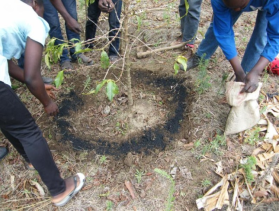
2) In agroforestry or shade-grown plantations that do not have standardized rows, biochar can be applied in semi-circles around the tree drip line. According to , Additional research is required to determine best practices for nutrient enhancement of biochar and application rate at different stages of coffee cultivation as well as for different coffee varieties, plantation styles, and soil types.
Figure 1. Ring Biochar application methods, for soil fertility and coffee yield enhancement. Source: .
The previous field experiment indicated coffee trees treated with 8t/ha biochar and chemical fertilizer levels of 100% recommendation resulted the highest responses in (366.9 mmol/m2/s), Chl (69.8 At-leaf readings), yield (0.57 kg of dry parchment/tree). The result concludes coffee pulp biochar, especially at a dose of 8t/ha, generates a positive effect on yield, leaf nutrient concentration and Chl of coffee trees . Utilization of 10t/ha coffee husk biochar gave the highest yield and significantly increased plant height, number of leaves, leaf area, wet weight, and dry weight of biomass per plant compared to no biochar . In the application of 10 t/haof biochar per hectare, there was an increase of 13.22%, 28.65%, and 15.81% compared to no biochar, respectively in plant height, wet weight, and the highest dry weight of the total biomass per plant .
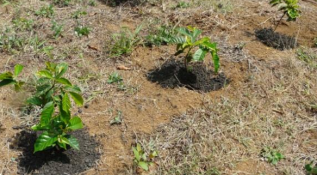
Figure 2. Biochar and compost being used to help retain moisture and boost growth of young coffee trees. Source:- .
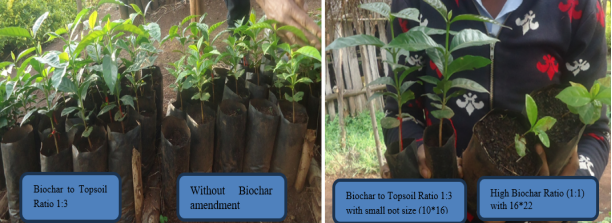
The empirical investigation undertaken in southern Ethiopia encompassed four distinct dimensions of pot size (P1=7x13cm, P2=10x16cm, P3=13x19cm, and P4=16x22cm) alongside five varying proportions of biochar to topsoil (0:1, 1:1, 1:2, 1:3, and 1:4 v/v), which illuminated notable divergences in the nutrient assimilation of seedlings attributable to the respective treatments and their interactive effects. Biochar application was highly accelerated coffee seed emergency rate when applied by one to one (1:1) biochar to topsoil ratio . The nitrogen assimilation of seedlings subjected to the 13x19cm pot size in conjunction with one to three ratios of biochar to topsoil exhibited an enhancement of 58.00%, whereas the phosphorus assimilation of seedlings cultivated in the 16x22cm pot size with 2g DAP/pot and a one to three biochar to topsoil ratio demonstrated increments of 46% and 43%, and the potassium assimilation of seedlings nurtured in the 16x22cm pot size with a one to three biochar to topsoil ratio was amplified by 180.00%, relative to conventional practices (. Consequently, the incorporation of biochar as a fertilizer at reduced application rates significantly enhances the nutrient uptake of seedlings, thereby offering alternative media options for the promotion of coffee seedling development while at high amount of application (1:1 and 1:2) ratio of biochar to topsoil could significantly affect the seedling growth . The other research result indicated that, coffee nurseries could include the use of biochar amended growing mediums using a 12.5% to 25% dosage based on our results and expect on average higher plant growth than soil and compost alone .
Figure 3. Own Picture from Awada Agricultural Research Center, Yirgalem Ethiopia.
Applying coffee pulp biochar can be a complementary practice to the application of chemical fertilizers (CF) of crops; however, little evidence of its combined effects on coffee cultivation has been reported The highest total dry weight (6.83g) of coffee seedling had resulted from one to three (1:3) biochar to topsoil ratio followed by (6.57g) harvested from pot size of 13cmx19cm interacted with one to four (1:4) biochar to topsoil ratio
4. Conclusion
Biochar can improve soil properties plant growth, and crop productivity. These benefits include higher growth and yield, greater water-holding capacity, enhance soil fertility, contribute to climate smart and favourable plant physiological responses. Biochar has enormous potential for application in climate smart sustainable agricultural production. Initial research indicates that employing biochar can boost crop productivity and soil fertility while minimizing the consequences of climate change. There are many different types of biochar, and they can affect soil characteristics, crop growth, and productivity in different ways. Crop growth and yield are significantly impacted by the rate of biochar addition; however, this varies depending on the crop and culture system. When it comes to crop development, biochar offers enormous promise for both coffee seedling production and environmentally friendly organic coffee production while diminishing the external input. But to encourage the use of biochar as a soil supplement against climate change, more investigation, development, and demonstration of its production and application rate as well as the types of feeds talk, level of temperature used for biochar production are a critical researchable area.
Abbreviations

BC

Biochar

CEC

Cation Exchange Capacity

CF

Chemical Fertilizers

Conflicts of Interest
The authors declare no conflicts of interest.
References
[1] Singh, Jagpreet, and Meenakshi Verma. "Waste Derived Modified Biochar as Promising Functional Material for Enhanced Water Remediation Potential." Environmental Research 245, (2024): 117999.
[2] Coomes, O. T. and Miltner, B. C., 2017. Indigenous charcoal and biochar production: potential for soil improvement under shifting cultivation systems. Land Degradation & Development, 28(3), pp. 811-821.
[3] Lozano Pérez, A. S., Romero Mahecha, V., & Guerrero Fajardo, C. A. (2023). Analysis of the Impact of Biomass/Water Ratio, Particle Size, Stirring, and Catalysts on the Production of Chemical Platforms and Biochar in the Hydrothermal Valorization of Coffee Cherry Waste. Sustainability, 16(17), 7415.
[4] Alghamdi, A. G., Alomran, A., Ibrahim, H. M., Alkhasha, A. and Majrashi, M. A., 2024. Spent coffee waste-derived biochar improves physical properties, water retention, and maize (Zea mays L.) growth in sandy soil. Scientific Reports, 14(1), p. 19753.
[5] Leta Ajema, Gezahegn Berecha, Taye Kufa. Effects of Pot Sizes and Biochar Base Media Composition on Nutrient Uptake of Coffee (Coffea arabica L.) Seedlings in South Ethiopia. World J Agri & Soil Sci. 8(1): 2022. WJASS.MS.ID.000678.
[6] Al-Wabel MI, Hussain Q, Usman AR, Ahmad M, Abduljabbar A, Sallam AS, Ok YS (2017) Impact of biochar properties on soil conditions and agricultural sustainability: a review. Land Degrad Dev 29: 2124–2161.
[7] Dias, D. R., Valencia, N. R., Franco, D. A. Z. and López-Núñez, J. C. 2014. Management and utilization of waste from coffee processing. In R. F. Schwan, and G. H. Fleet (Eds.), Cocoa and coffee fermentations (p. 376-382). Boca Raton: CRC Taylor & Francis.
[8] Sanchez-Reinoso, A. D., Lombardini, L. and Restrepo-Díaz, H., 2022. Physiological behaviour and nutritional status of coffee (Coffea arabica L. var. Castillo) trees in response to biochar application. The Journal of Agricultural Science, 160(3-4), pp. 220-234.
[9] Lehman, J., Da Silva Jr. J. P., Steiner, C., Nehls, T., Zech, W. and Glaser, B., 2003. Nutrient Availability and Leaching Plant and Soil. 249: 343-357.
[10] Chang, K. Y., Van Zwieten, L., and Joseph, S., 2008. Agronomic Values of Green waste Biochar as a Soil Amendment. Australian Journal of Soil Research, 45: 629-634.
[11] Berihun, T., Tadele, M. and Kebede, F., 2017. The application of biochar on soil acidity and other physico‐chemical properties of soils in southern Ethiopia. Journal of plant nutrition and soil Science, 180(3), pp. 381-388.
[12] Tangmankongworakoon, N., 2019. An approach to produce biochar from coffee residue for fuel and soil amendment purpose. International Journal of Recycling of Organic Waste in Agriculture, 8, pp. 37-44.
[13] Mishra, Ranjeet K., and Kaustubha Mohanty. "A Review of the Next-generation Biochar Production from Waste Biomass for Material Applications." Science of The Total Environment 904, (2023): 167171. Accessed October 13, 2024.
[14] Heitkötter, J.; Marschner, B. Interactive effects of biochar ageing in soils related to feedstock, pyrolysis temperature, and historic charcoal production. Geoderma 2015, 245–246, 56–64.
[15] Shamim M, Saha N & Hye FB. 2018. Effect of biochar on seed germination, early growth of Oryza sativa L. and soil nutrients. Tropical Plant Research 5(3): 336–342.
[16] Jeffery S, Verheijen FGA, Van Der Velde M, Bastos AC., 2011 A quantitative review of the effects of biochar application to soils on crop productivity meta-analysis. Agriculture Ecosystems & Environment, 144: 175-187.
[17] Sosu, G., 2014. The growth of cocoa seedlings as affected by different growth media and different polybag sizes. (Doctoral Dissertation University of Ghana).
[18] Mishra, A., 2018. Effects of biochar on soil respiration and nitrogen mineralization in boreal forests. Plant and Soil. 425(12): 71–85.
[19] Min Seok Cho, L., 2017. The effects of biochars on the growth of Zelkova serrata seedlings in a containerized seedling production system. Forest Science and Technology, 13(1): 25-30.
[20] Tariku B, Shiferaw T, Muluken T, and Firew K, 2017. Effect of Biochar Application on Growth of Garden Pea (Pisum sativum L.) in Acidic Soils of Bule Woreda Gedeo Zone Southern Ethiopia. International Journal of Agronomy. 2017(23): 8-17.
[21] Cheng, Ning, Bing Wang, Pan Wu, Xinqing Lee, Ying Xing, Miao Chen, and Bin Gao. 2015. "Adsorption of Emerging Contaminants from Water and Wastewater by Modified Biochar: A Review." Environmental Pollution 273, (2021): 116448. Accessed October 13, 2024.
[22] Kanyiri, G. and Waswa, F., 2017. Enhancing benefits from biomass wastes within small-medium scale coffee processing factories in Kiambu County, Kenya. African Journal of Environmental Science and Technology, 11(4): 198-206.
[23] Laird, D., P. Fleming, B. Wang, R. Horton and D., 2010. Biochar impact on nutrient leaching from a Midwestern agricultural soil. Cosmas, 158: 436-442.
[24] Verheijen, F., Jeffery, S., Bastos, A. C., Van der Velde, M. and Diafas, I., 2010. Biochar application to soils. A critical scientific review of effects on soil properties, processes, and functions. EUR, 24099(162), pp. 2183-2207.
[25] Glaser, B., Lehmann, J. and Zech, W. 2002. Ameliorating Physical and Chemical Properties of Highly Weathered Soil in the Tropics with Charcoal. A Review, Biology, and Fertility of Soil, 35: 219-230.
[26] Zhang, R., Zhang, Y., Wu, J., 2013. Biochar enhances nut quality of Torreya grandis and soil fertility under simulated nitrogen deposition. For. Ecol. Manag. 391: 321–329.
[27] Agegnehu J., 2017. Biochar, Compost and Biochar-Compost: Effects on Crop Performance, Soil Quality and Greenhouse Gas Emissions in Tropical Agricultural Soils (Doctoral dissertation, James Cook University).
[28] Albuquerque J. A., Salazar P., Barròn V., Torrent J., del Campillo M. C., Gallardo A., (2013). Enhanced wheat yield by biochar addition under different mineralization levels. Agron. Sustain. Dev. 33 475–484.
[29] Lei, O., & Zhang, R. 2013. Effects of biochars derived from different pyrolysis temp on soil physical and hydraulic properties. Journal of Soils and Sediments, 13(9): 1561-157.
[30] Kammann C. I., Schmidt H.-P., Messerchmidt N., Linsel S., Steffens D., Müller C., et al. (2015). Plant growth improvement mediated by nitrate capture in co-composted biochar. Sci. Rep. 5: 11080.
[31] Kathleen D, 2018. The Potential for Biochar to Improve Sustainability in Coffee Cultivation and Processing. IBI. Biochar for Sustainable Soils Project.
[32] Sohi, S. P.; Krull, E.; Lopez-Capel, E.; Bol, R. A review of biochar and its use and function in soil. Adv. Agron. 2010, 105, 47–82.
[33] Abebe N, Mastawesha M, and Gebermedihin A., 2012. Biochar Application Effect on Soil Properties and Nutrient Uptake of Lettuces (Lactuca sativa) Grown in Chromium.
[34] Major, J., 2009. Biochar application to a Colombian Savanna Oxisol: Fate and effect on soil fertility, crop production, nutrient leaching and soil hydrology (Doctoral dissertation, Cornell University). 234p.
[35] Kim B.-R., Shin J., Guevarra R. B., Lee J. H., Kim D. W., Seol K. (2017). Deciphering diversity indeces for a better understanding of microbial communities. J. Microbiol. Biotechnol. 27 2089–2093.
[36] Domingues, Rimena R., 2017. "Properties of biochar derived from wood and high-nutrient biomasses of agronomic and environmental benefits." PloS one, 12(5): 21-22.
[37] Lehmann, J. & Rondon, M., 2006. Bio-char soil management on highly weathered soils in the humid tropics. Biological approaches to soil systems. CRC Press, Raton, FL, 7: 517-530.
[38] Chen D., Guo H., Li R., Li L., Pan G., Chang A., (2016). Low uptake affinity cultivars with biochar to tackle Cd-tainted rice – A field study over four rice seasons in Hunan. China Sci. Total Environ. 541 1489–1498.
[39] Palviainen, M., Berninger, F., Bruckman, Aaltonen, H., 2018. ‘Effects of biochar on carbon and nitrogen fluxes in boreal forest soil’, Plant and Soil.
[40] Rangaswami. M. N., 2018. Effect of biochar on phosphorus transformation in an acid soil and its nutrition in wheat. Soil Science and Agricultural Chemistry. 97p.
[41] Chenglin, Li., Shutan, Ma., Zongyang, Han., Jun, Shan. (2023). Biochar mitigates N2O emissions by promoting complete denitrification in acidic and alkaline paddy soils. European Journal of Soil Science, Available from:
[42] Yue, Y., Cui, L., Lin, Q., Li, G., Zhao, X., 2017. Efficiency of sewage sludge biochar in improving urban soil properties Chemosphere 173: 551–556.
[43] Gul, S., Whalen, J. K., 2016. Biochemical cycling of nitrogen and phosphorus in biochar amended soils - review paper. Soil Biol. Biochem. 103: 1–15.
[44] Rossana M,. 2018. Impact of Biochar Amendment on Soil Quality in a Greenhouse Environment. Journal of Environmental Accounting and Management, 6(4): 313–324.
[45] Dai, Y., Wang, W., Lu, L., Yan, L. and Yu, D., 2020. Utilization of biochar for the removal of nitrogen and phosphorus. Journal of Cleaner Production, 257, p. 120573.
[46] Mukherjee, A., Zimmerman, A. R., Harris, W., 2011. Surface chemistry variations among a series of laboratory-produced biochars. Cosmas. 163: 247–255.
[47] Wang, B., Teng, Y., Xu, Y., Chen, W., Ren, W., Li, Y., Christie, P. and Luo, Y., 2018. Effect of mixed soil microbiomes on pyrene removal and the response of the soil microorganisms. Science of the Total Environment, 640, pp. 9-17.
[48] Laghari, M., Mirjat, M. S., Hu, Z., Fazal, S., Xiao, B., Hu, M., Chen, Z. and Guo, D., 2015. Effects of biochar application rate on sandy desert soil properties and sorghum growth. Catena, 135, pp. 313-320.
[49] Thakuria, D., Hazarika, S. and Krishnappa, R., 2016. Soil acidity and management options. Indian Journal of Fertilisers, 12(12), pp. 40-56.
[50] Dawerasha, S. S., Nebiyu, A., Ahmed, M. et al. Effect of coffee husk biochar and inorganic NP fertilizer on soil properties, growth and yield of potato (Solanum tuberosum L.) on acidic soil of southwest Ethiopia. CABI Agric Biosci 5, 56(2024).
[51] Mesfin K. 2008. Nature, and Management of Acid Soils in Ethiopia, Addis Ababa, Ethiopia.
[52] Paulos D., 1994. Ecology and soils of major coffee growing regions of Ethiopia. In Mineral Fertilization of Coffee in Ethiopia (Paulos Dubale, ed.). (IAR), Addis Ababa, Ethiopia.
[53] Lee, Yu-Jie, Hu., Rui-Jie, Tang., Tian-Yi, Hu., Qi-Qi, Chen., Shui-Rong, Tang., Yan-Zheng, Wu., Meng. (2024). Effects of Biochar Application Two Years Later on N2O and CH4 Emissions from Rice Vegetable Rotation in a Tropical Region of China]. 45(2), 929-939. Available from:
[54] Amin, F. R., Huang, Y., He, Y., Zhang, R., Liu, G. and Chen, C., 2016. Biochar applications and modern techniques for characterization. Clean Technologies and Environmental Policy, 18, pp. 1457-1473.
[55] Agegnehu, G.; Srivastava, A.; Bird, M. The role of biochar and biochar-compost in improving soil quality and crop performance: Areview. Appl. Soil Ecol. 2017, 119, 156–170.
[56] Igalavithana, A. D., Ok, Y. S., 2016. The effects of biochar amendment on soil fertility Soil Science Society of America, Inc. 63 (40): 123–144.
[57] Chen., Lukas, Van, Ya-Lei, Zwieten., Keqing, Xiao., Chao, Liang., Jiaqi, Ren., Yang, Li., Hailiang, Dong. (2024). Biochar as a green solution to drive the soil carbon pump. Carbon Research. Available from:
[58] Purakayastha., Debarati, Tapan, Jyoti, Bhaduri., Pooja, Singh. (2021). Role of Biochar on Greenhouse Gas Emissions and Carbon Sequestration in Soil: Opportunities for Mitigating Climate Change. 237-260. Available from:
[59] Azad., Humayun, Javeed, Ia, Bhat., Shameem, A., Shameem. (2023). Potential of Biochar to Sequester Carbon and Mitigate Greenhouse Gas Emissions. Current Journal of Applied Science and Technology, 42(4), 24-31. Available from:
[60] Hu., Yu-Jie, Rui-Jie, Tang., Tian-Yi, Hu., Qi-Qi, Chen., Shui-Rong, Tang., Yan-Zheng, Wu., Lei, Meng. (2024). [Effects of Biochar Application Two Years Later on N2O and CH4 Emissions from RiceVegetable Rotation in a Tropical Region of China].. 45(2).
[61] Muhammad., Damris, Ngatijo, Ngatijo., Ira, Galih, Prabasari., Bunga, Mardhotillah. (2023). The Effects of Biochar Incorporation on the CO2, N2O, and CH4 Emissions from the Soils of Stallholder Palm Oil Plantations, Jambi Province Indonesia. Journal of applied agricultural science and technology, Available from:
[62] Harrison., Brendan, P., Si, Gao., To, Van, Thao., Melinda, Gonzales., Kennedy, L., Williams., Natalie, Scott., Lauren, Hale., Teamrat, A., Ghezzehei., Gerardo, Diaz., Rebecca, A, Ryals. (2023). Methane and nitrous oxide emissions during biochar‐composting are driven by biochar application rate and aggregate formation. Gcb Bioenergy, Available from:
[63] Filho., Argemiro, Pereira, Martins, Erika, Valente, de, Medeiros., José, Romualdo, de, Sousa, Claude, Hammecker. (2021). Impact of coffee biochar on carbon, microbial biomass and enzyme activities of a sandy soil cultivated with bean. Anais Da Academia Brasileira De Ciencias, 93(4) Available from:
[64] Dumas., José, A., Joaquín, A., Chong., Christian, G., Rivera-Goyco. (2022). Simple method of coffee-shrub biochar-ozonolysis. Journal of Agriculture of The University of Puerto Rico, 106(1), 91-108. Available from:
[65] Jirka, S. and Tomlinson, T., 2015. State of the biochar industry 2014. International biochar initiative rep.
[66] Fenta, Amanu A. "State of the Art of Biochar in Ethiopia. A Review." Heliyon 10, no. 3 (2024): e24934. Accessed October 9, 2024.
[67] Khan, S., Irshad, S., Mehmood, K., Hasnain, Z., Nawaz, M., Rais, A., Gul, S., Wahid, M. A., Hashem, A., Abd_. and Ibrar, D., 2024. Biochar production and characteristics, its impacts on soil health, crop production, and yield enhancement: A review. Plants, 13(2), p. 166.
[68] Sánchez-Reinoso, A. D., Ávila-Pedraza, E. Á., Lombardini, L. and Restrepo-Díaz, H., 2023. The Application of Coffee Pulp Biochar Improves the Physical, Chemical, and Biological Characteristics of Soil for Coffee Cultivation. Journal of Soil Science and Plant Nutrition, 23(2), pp. 2512-2524.
[69] Jiang, Z., Lou, Y., Liu, X., Sun, W., Wang, H., Liang, J., Guo, J., Li, N. and Yang, Q., 2023. Combined application of coffee husk compost and inorganic fertilizer to improve the soil ecological environment and photosynthetic characteristics of arabica coffee. Agronomy, 13(5), p. 1212.
[70] Leta Ajema Gebisa. (2022). Coffee (Coffea arabica L.) Seed Emergence and Seedling Growth Rate Responses to Different Pot Size and Biochar Based Nursery Media Preparation at Awada South Ethiopia. American Journal of Plant Biology, 7(3), 127-131.
[71] Jhong Chung, J., 2021. Using Biochar in Coffee Agroforestry Management to Store Soil Carbon and Produce Biomass Energy in Puerto Rico (Doctoral dissertation).
[72] Gebisa LA. 2024. Cost of Productions and Partial Budget Analysis of Coffee (Coffea arabica L.) Seedling Across Various Pot Sizes and Biochar-Based Media Preparations. Am J BioSci Bioeng.; 12(5): 76-82.
[73] Perfecto, I., Vandermeer, J. and Philpott, S. M., 2014. Complex ecological interactions in the coffee agroecosystem. Annual Review of Ecology, Evolution, and Systematics, 45(1), pp. 137-158.
[74] Leta Ajema Gebisa (2024). Biomass Production and Partitioning Response of Coffee (Arabica Coffea L.) Seedlings to Different Poly-Bag Size and Biochar Based Media Preparations. Glob Acad J Agri Biosc; Vol-6, Iss- 3 pp- 48-56.
[75] Igalavithana, A. D., Mandal, S., Niazi, N. K., Vithanage, M., Parikh, S. J., Mukome, F. N., Rizwan, M., Oleszczuk, P., Al-Wabel, M., Bolan, N. and Tsang, D. C., 2017. Advances and future directions of biochar characterization methods and applications. Critical reviews in environmental science and technology, 47(23), pp. 2275-233.
[76] Polluted Soils. American-Eurasian J. Agric. & Environ. Sci. 12(3): 369-376.
Cite This Article
  • APA Style

    Gebisa, L. A., Regasa, M. D. (2024). Biochar's Role in Enhancing Soil Fertility and Current Trends of Utilization for Sustainable Coffee (Coffea arabica L.) Production: A Review. Journal of Energy, Environmental & Chemical Engineering, 9(4), 100-108. https://doi.org/10.11648/j.jeece.20240904.12

    Copy | Download

    ACS Style

    Gebisa, L. A.; Regasa, M. D. Biochar's Role in Enhancing Soil Fertility and Current Trends of Utilization for Sustainable Coffee (Coffea arabica L.) Production: A Review. J. Energy Environ. Chem. Eng. 2024, 9(4), 100-108. doi: 10.11648/j.jeece.20240904.12

    Copy | Download

    AMA Style

    Gebisa LA, Regasa MD. Biochar's Role in Enhancing Soil Fertility and Current Trends of Utilization for Sustainable Coffee (Coffea arabica L.) Production: A Review. J Energy Environ Chem Eng. 2024;9(4):100-108. doi: 10.11648/j.jeece.20240904.12

    Copy | Download

  • @article{10.11648/j.jeece.20240904.12,
      author = {Leta Ajema Gebisa and Meseret Degefa Regasa},
      title = {Biochar's Role in Enhancing Soil Fertility and Current Trends of Utilization for Sustainable Coffee (Coffea arabica L.) Production: A Review
    },
      journal = {Journal of Energy, Environmental & Chemical Engineering},
      volume = {9},
      number = {4},
      pages = {100-108},
      doi = {10.11648/j.jeece.20240904.12},
      url = {https://doi.org/10.11648/j.jeece.20240904.12},
      eprint = {https://article.sciencepublishinggroup.com/pdf/10.11648.j.jeece.20240904.12},
      abstract = {Biochar, a carbonaceous material prepared from diverse organic waste, has gained substantial attention due to its excellent attributes, like carbon content, CEC, abundant specific surface area, structural characteristics, plant nutrient contribution, water and plant nutrient retention etc. Incorporating biochar to the soil system introduces supplementary organic matter, thereby augmenting the comprehensive nutrient composition and microbial dynamics within the soil ecosystem for a long time that completely fit for perennial crops cultivated in acid prone areas like coffee production. Biochar producing organic materials are easily accessible in coffee production areas from coffee husks that pollute the river streams and generally create environmental pollution. However, as biochar advantages are too aged technology to solve general soil fertility problems, there is no comprehensive research recommendation generated for biochar application in coffee producing area specially in organic coffee producing countries like Ethiopia. Therefore, this systematic review attempts to gather more available empirical research on google scholars by using clearly defined, systematic terms to obtain answers for a specific question like ‘how to use biochar for coffee production and coffee nursery media preparations. More than 70 papers written by different authors and project papers were searched from google scholars and research gets. Through this investigation, we obtained critical information that may suggest the sustainable effects of biochar on enhancing soil fertility and improving both the production and productivity of coffee, while simultaneously preserving the ecological integrity of the soil system. Applying biochar for soil fertility enhancement is a critical technic that boosts the soil physical, chemical, and biological contents while mitigating the greenhouse gas like methane emission and sequestering the carbon stalk within the soil systems.
    },
     year = {2024}
    }
    

    Copy | Download

  • TY  - JOUR
    T1  - Biochar's Role in Enhancing Soil Fertility and Current Trends of Utilization for Sustainable Coffee (Coffea arabica L.) Production: A Review
    
    AU  - Leta Ajema Gebisa
    AU  - Meseret Degefa Regasa
    Y1  - 2024/12/25
    PY  - 2024
    N1  - https://doi.org/10.11648/j.jeece.20240904.12
    DO  - 10.11648/j.jeece.20240904.12
    T2  - Journal of Energy, Environmental & Chemical Engineering
    JF  - Journal of Energy, Environmental & Chemical Engineering
    JO  - Journal of Energy, Environmental & Chemical Engineering
    SP  - 100
    EP  - 108
    PB  - Science Publishing Group
    SN  - 2637-434X
    UR  - https://doi.org/10.11648/j.jeece.20240904.12
    AB  - Biochar, a carbonaceous material prepared from diverse organic waste, has gained substantial attention due to its excellent attributes, like carbon content, CEC, abundant specific surface area, structural characteristics, plant nutrient contribution, water and plant nutrient retention etc. Incorporating biochar to the soil system introduces supplementary organic matter, thereby augmenting the comprehensive nutrient composition and microbial dynamics within the soil ecosystem for a long time that completely fit for perennial crops cultivated in acid prone areas like coffee production. Biochar producing organic materials are easily accessible in coffee production areas from coffee husks that pollute the river streams and generally create environmental pollution. However, as biochar advantages are too aged technology to solve general soil fertility problems, there is no comprehensive research recommendation generated for biochar application in coffee producing area specially in organic coffee producing countries like Ethiopia. Therefore, this systematic review attempts to gather more available empirical research on google scholars by using clearly defined, systematic terms to obtain answers for a specific question like ‘how to use biochar for coffee production and coffee nursery media preparations. More than 70 papers written by different authors and project papers were searched from google scholars and research gets. Through this investigation, we obtained critical information that may suggest the sustainable effects of biochar on enhancing soil fertility and improving both the production and productivity of coffee, while simultaneously preserving the ecological integrity of the soil system. Applying biochar for soil fertility enhancement is a critical technic that boosts the soil physical, chemical, and biological contents while mitigating the greenhouse gas like methane emission and sequestering the carbon stalk within the soil systems.
    
    VL  - 9
    IS  - 4
    ER  - 

    Copy | Download

Author Information
  • Ethiopia Institute of Agricultural Research, Awada Agricultural Research Sub-Center, Yirgalem, Ethiopian
  • Ethiopia Institute of Agricultural Research, Awada Agricultural Research Sub-Center, Yirgalem, Ethiopian